Shakyamuni Buddha is one of the most important spiritual figures in human history. Known originally as Siddhartha Gautama, he was a prince who left behind royal comfort in search of the truth about life, suffering, peace, and liberation. His journey from a sheltered palace life to enlightenment under the Bodhi tree became the foundation of Buddhism, a spiritual tradition followed by millions of people around the world.
The word Shakyamuni means “Sage of the Shakya clan.” He is called Shakyamuni Buddha because he was born into the Shakya family, a ruling clan of the ancient Himalayan region. His birthplace, Lumbini, lies in present-day Nepal and is one of the most sacred pilgrimage destinations for Buddhists.
For travelers visiting Nepal, understanding Shakyamuni Buddha is not only a religious experience. It is also a cultural, historical, and philosophical journey. His image appears in monasteries, stupas, Thangka paintings, statues, prayer halls, meditation centers, and sacred sites across Nepal and the Himalayan region.
Shakyamuni Buddha was born as Prince Siddhartha Gautama in Lumbini. According to Buddhist tradition, he was born into a royal family and lived a life of comfort in his early years. His father wished to protect him from the harsh realities of life, so Siddhartha was raised inside the palace with luxury, pleasure, and privilege.
However, as he grew older, Siddhartha began to see the truth of human life. He encountered old age, sickness, death, and a spiritual seeker. These experiences deeply moved him. He realized that wealth, power, youth, and comfort could not protect human beings from suffering.
This realization became the turning point of his life. Siddhartha left the palace, his royal identity, and his comfortable life to search for a deeper truth. After years of meditation, discipline, and spiritual practice, he attained enlightenment in Bodh Gaya, India, and became the Buddha, meaning “the Awakened One.”
The word Buddha means “one who is awake” or “one who has realized the truth.” Shakyamuni Buddha is not considered a god in the ordinary sense. Instead, he is honored as a fully awakened teacher who discovered the path to freedom from suffering.
His enlightenment was not based on blind belief. It came through deep observation, meditation, self-discipline, and direct understanding of reality. This is why Buddhism places strong emphasis on personal experience, wisdom, compassion, and mindful living.
Shakyamuni Buddha taught that every human being has the potential to develop wisdom and compassion. His message was simple but powerful, suffering exists, suffering has causes, suffering can end, and there is a path to end suffering.
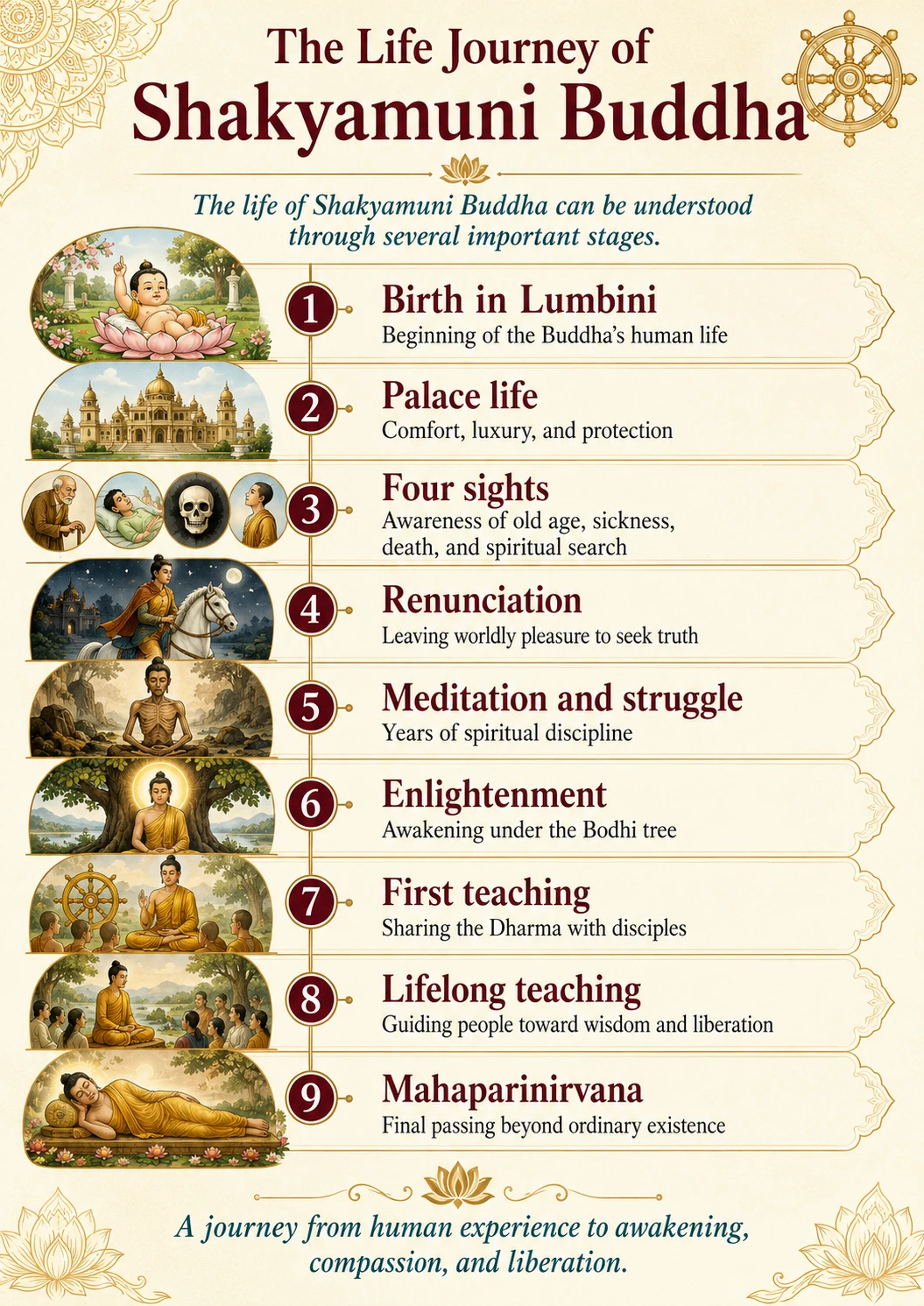
The life of Shakyamuni Buddha can be understood through several important stages.
| Stage | Meaning |
|---|---|
| Birth in Lumbini | Beginning of the Buddha’s human life |
| Palace life | Comfort, luxury, and protection |
| Four sights | Awareness of old age, sickness, death, and spiritual search |
| Renunciation | Leaving worldly pleasure to seek truth |
| Meditation and struggle | Years of spiritual discipline |
| Enlightenment | Awakening under the Bodhi tree |
| First teaching | Sharing the Dharma with disciples |
| Lifelong teaching | Guiding people toward wisdom and liberation |
| Mahaparinirvana | Final passing beyond ordinary existence |
His life teaches that true peace does not come from wealth or status. It comes from understanding the mind, reducing attachment, and living with compassion and awareness.
The foundation of Shakyamuni Buddha’s teaching is known as the Four Noble Truths. These truths explain the nature of suffering and the path to liberation.
1. The Truth of Suffering
Life includes suffering, dissatisfaction, uncertainty, loss, aging, sickness, and death. Even pleasure is temporary, so depending only on external happiness creates disappointment.
2. The Truth of the Cause of Suffering
Suffering arises from craving, attachment, ignorance, and the desire to control things that are always changing.
3. The Truth of the End of Suffering
Freedom from suffering is possible when craving, ignorance, and attachment are overcome.
4. The Truth of the Path
There is a practical path that leads to peace, wisdom, and liberation. This path is called the Noble Eightfold Path.
The Noble Eightfold Path is the practical guide taught by Shakyamuni Buddha. It is not only for monks or religious practitioners. It can also guide ordinary people in daily life.
| Path | |
|---|---|
| Right View | Understanding life clearly |
| Right Intention | Developing kindness and wisdom |
| Right Speech | Speaking truthfully and kindly |
| Right Action | Acting ethically |
| Right Livelihood | Earning a living without harming others |
| Right Effort | Cultivating good qualities |
| Right Mindfulness | Being aware of body, mind, and feelings |
| Right Concentration | Developing meditation and mental clarity |
This path encourages balance. It avoids both extreme luxury and extreme self-denial. For this reason, Buddhism often describes the Buddha’s teaching as the Middle Way.
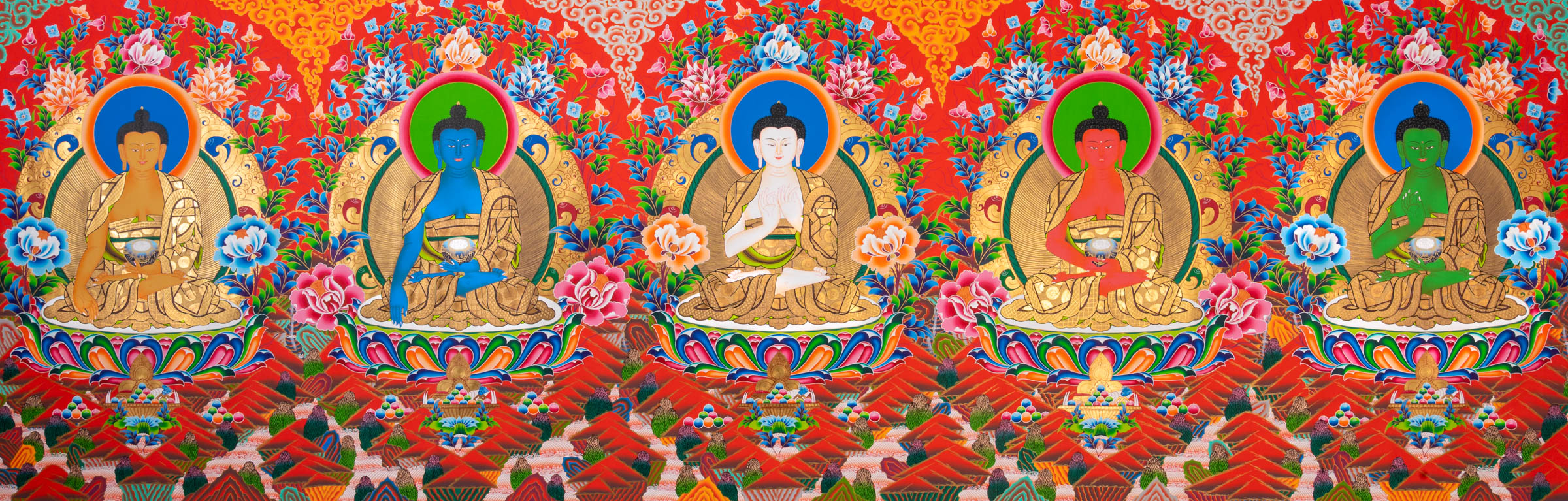
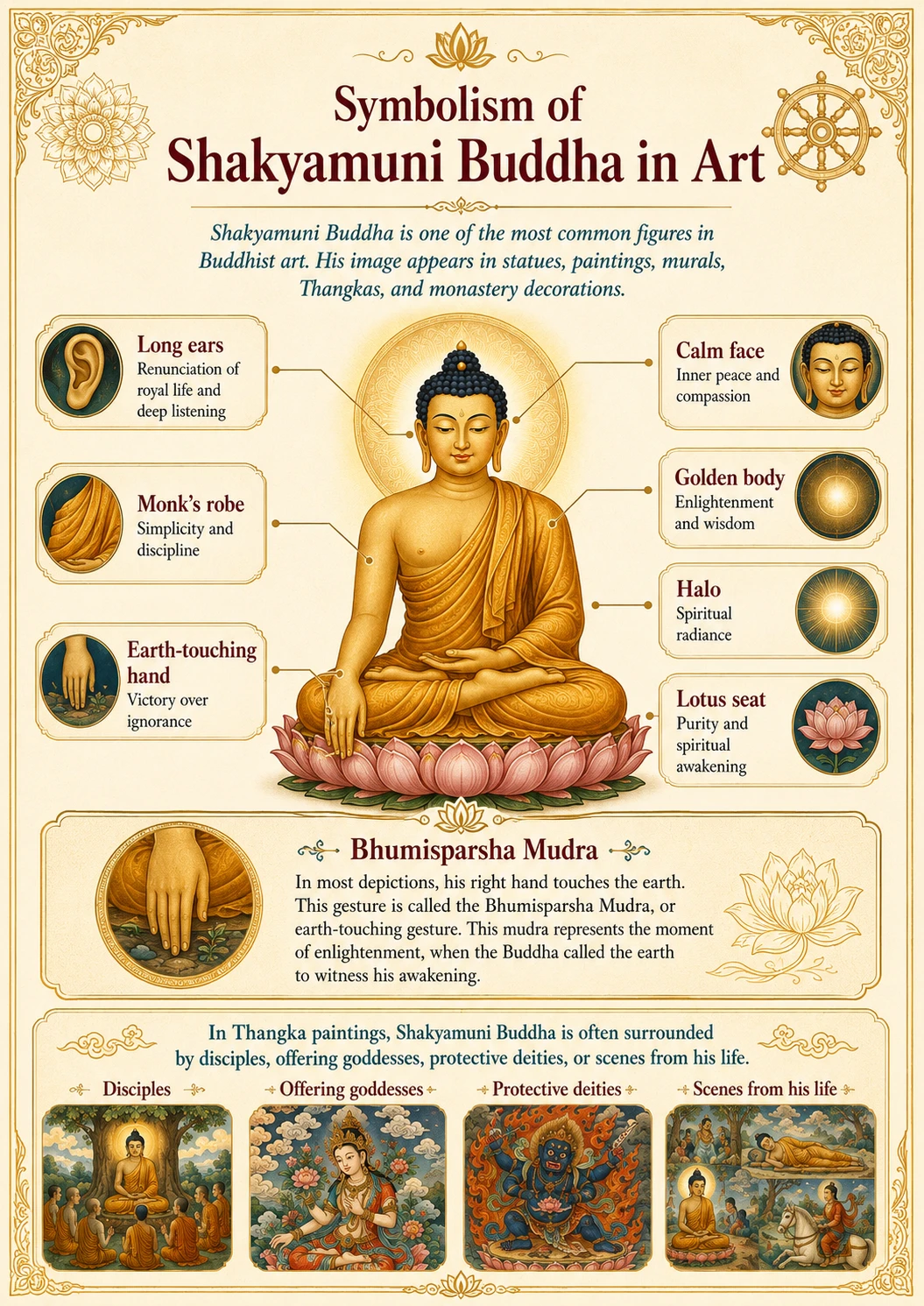
Shakyamuni Buddha is one of the most common figures in Buddhist art. His image appears in statues, paintings, murals, Thangkas, and monastery decorations.
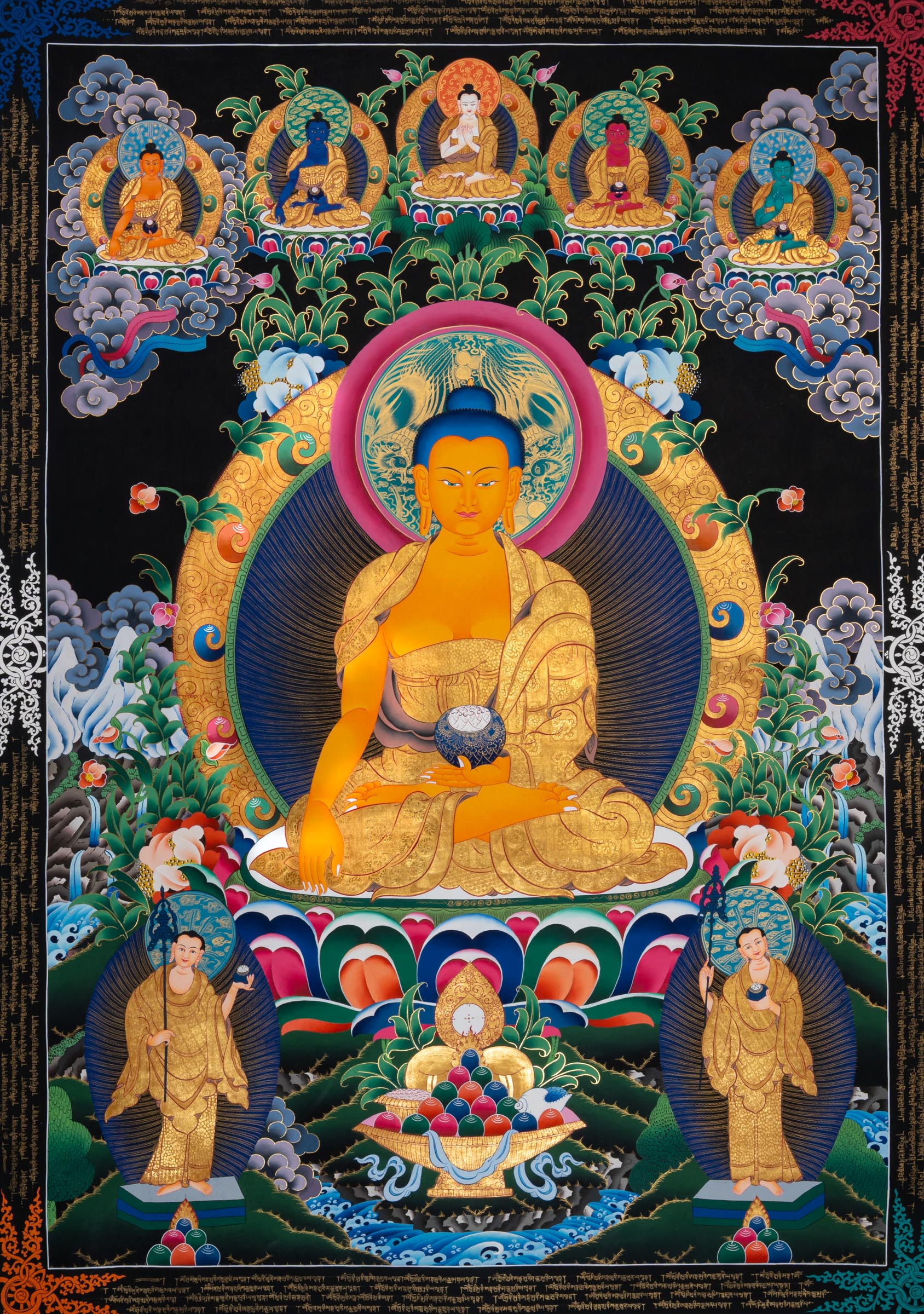
In most depictions, he is shown seated in meditation posture with a calm face, long ears, a golden body, and a simple monk’s robe. His right hand often touches the earth. This gesture is called the Bhumisparsha Mudra, or earth-touching gesture.
This mudra represents the moment of enlightenment, when the Buddha called the earth to witness his awakening.
Common symbols associated with Shakyamuni Buddha include:
| Symbol | Meaning |
|---|---|
| Lotus seat | Purity and spiritual awakening |
| Golden body | Enlightenment and wisdom |
| Long ears | Renunciation of royal life and deep listening |
| Calm face | Inner peace and compassion |
| Earth-touching hand | Victory over ignorance |
| Halo | Spiritual radiance |
| Monk’s robe | Simplicity and discipline |
In Thangka paintings, Shakyamuni Buddha is often surrounded by disciples, offering goddesses, protective deities, or scenes from his life.
Nepal holds a special place in the life story of Shakyamuni Buddha because Lumbini is his birthplace. Lumbini is one of the most sacred Buddhist pilgrimage sites in the world. Pilgrims from Nepal, India, Sri Lanka, Thailand, Myanmar, Bhutan, Tibet, China, Korea, Japan, Vietnam, and many other countries visit Lumbini to pay respect.
Important places in Lumbini include:
| Site | Significance |
|---|---|
| Maya Devi Temple | Marks the sacred birthplace of Buddha |
| Ashoka Pillar | Ancient evidence of Lumbini’s importance |
| Sacred Garden | Peaceful pilgrimage and meditation area |
| Monastic Zone | Monasteries built by different Buddhist countries |
| World Peace Pagoda | Symbol of peace and harmony |
| Lumbini Museum | Buddhist history and cultural study |
For travelers interested in Buddhist culture, Lumbini is one of the most meaningful destinations in Nepal. A visit to Lumbini can be combined with Kathmandu, Pokhara, Chitwan, or a longer Buddhist heritage tour.
In Nepal, Tibet, Bhutan, and the Himalayan regions, Shakyamuni Buddha is deeply respected as the historical Buddha. His teachings form the foundation of Buddhist philosophy, meditation, and monastic education.
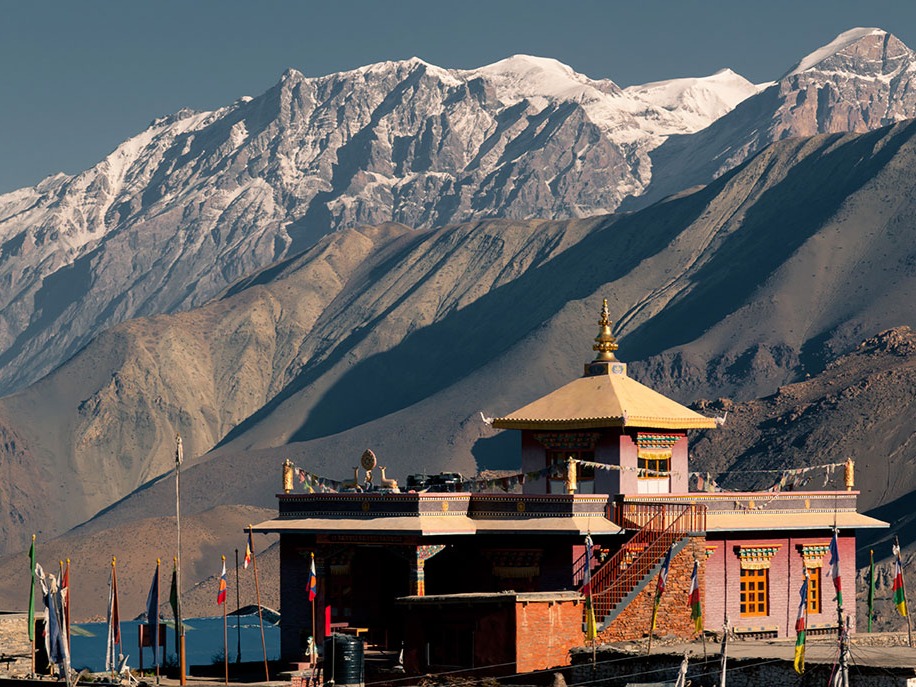
In Himalayan monasteries, his image is usually placed at the center of the main shrine. Monks offer butter lamps, incense, flowers, and prayers in front of his statue. His life story is also taught through murals, ritual texts, and oral teachings.
In Thangka painting schools, Shakyamuni Buddha is one of the first important subjects that students learn to draw. This is because his form teaches proportion, discipline, iconography, and sacred meaning.
The teachings of Shakyamuni Buddha are still highly relevant today. In a world filled with stress, competition, distraction, and uncertainty, his message offers practical wisdom.
1. Peace Begins in the Mind
The Buddha taught that the mind shapes our experience. A disturbed mind creates suffering, while a trained mind creates clarity and peace.
2. Everything Is Impermanent
Life constantly changes. Relationships, success, failure, youth, health, and emotions are temporary. Understanding impermanence helps us become less attached and more peaceful.
3. Compassion Is Strength
Shakyamuni Buddha taught compassion not as weakness, but as wisdom in action. A compassionate person understands s4. Awareness Reduces Suffering
Mindfulness helps us observe our thoughts and emotions before reacting. This is useful in family life, leadership, work, education, and personal growth.
5. Balance Is Essential
The Middle Way teaches us not to live in extremes. A meaningful life needs discipline, but also kindness toward oneself.
Travelers who want to experience the spiritual heritage of Shakyamuni Buddha in Nepal can explore several important places.
The birthplace of Buddha and the most important Buddhist pilgrimage site in Nepal.
One of the largest and most sacred Buddhist stupas in Nepal, located in Kathmandu.
Also known as the Monkey Temple, this ancient hilltop stupa offers deep spiritual atmosphere and panoramic views of Kathmandu Valley.
A peaceful monastery near Kathmandu, popular for meditation courses and Buddhist learning.
A sacred Buddhist pilgrimage site connected with a famous story of compassion from one of the Buddha’s previous lives.
A Buddhist cultural journey in Nepal can include meditation, monastery visits, Thangka art workshops, heritage walks, and spiritual storytelling.
Many travelers come to Nepal for mountains, trekking, and adventure. But Nepal’s deeper beauty is not only in its landscapes. It is also in its spiritual traditions, sacred art, ancient stories, and peaceful way of life.
Learning about Shakyamuni Buddha helps visitors understand
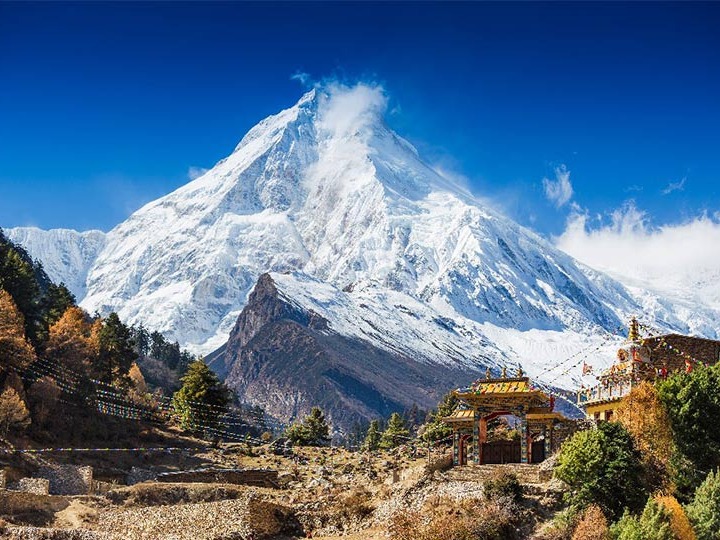
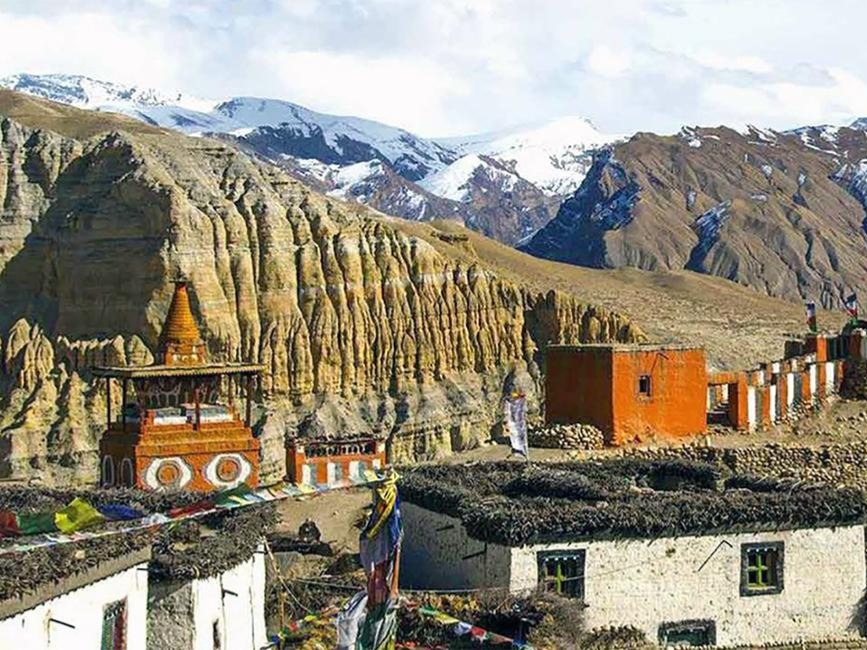
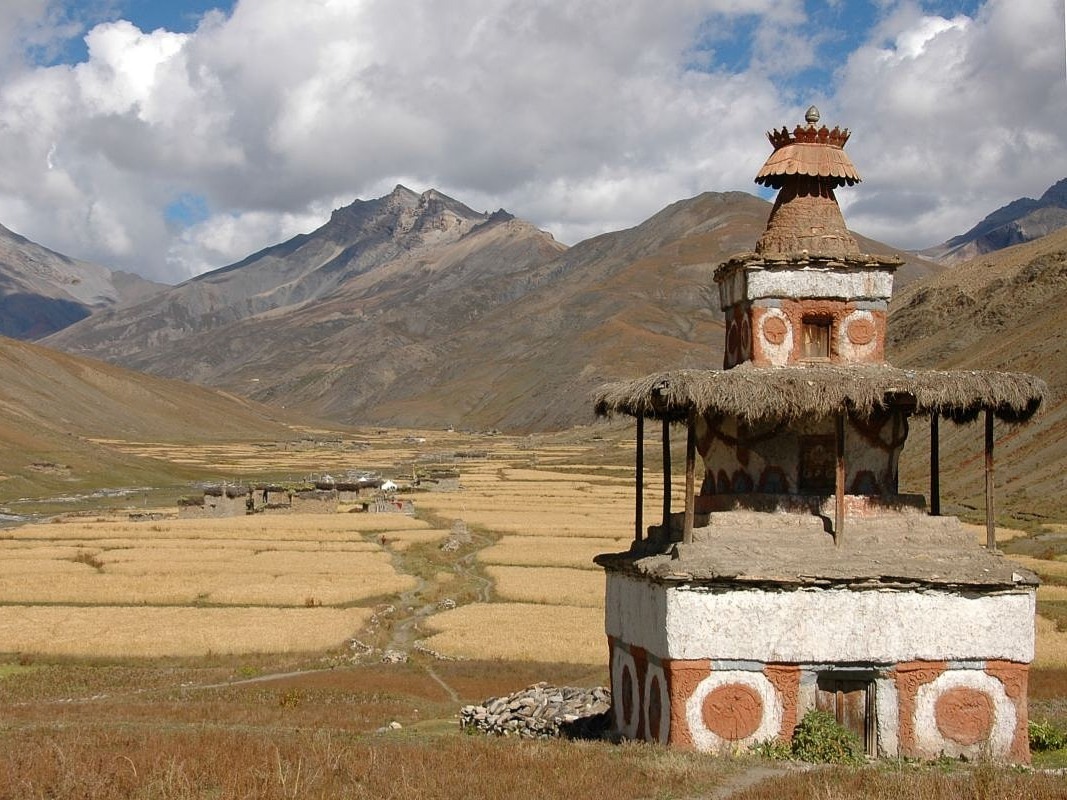
For trekkers, especially those visiting Everest, Langtang, Manaslu, Upper Mustang, or Dolpo, Buddhist culture is part of the journey. Monasteries, mani walls, chortens, prayer wheels, and sacred mountains all reflect the influence of Buddhist teachings.
Shakyamuni Buddha’s life is a powerful reminder that true happiness is not found only in wealth, comfort, or external success. His journey from palace life to enlightenment shows the courage to ask deep questions and search for lasting truth.
His teachings on compassion, mindfulness, wisdom, and balance continue to guide people across the world. Whether you are a spiritual seeker, cultural traveler, trekker, student, or art lover, understanding Shakyamuni Buddha adds depth to your journey through Nepal.
When you visit Lumbini, Boudhanath, Swayambhunath, or a Himalayan monastery, you are not simply visiting a tourist site. You are entering a living tradition shaped by more than two thousand years of devotion, philosophy, and spiritual practice.
Shakyamuni Buddha remains a symbol of peace, awakening, and human possibility.











© Copyright Gateway Adventure Treks and Expedition Pvt. Ltd., 2026 All Rights Reserved